Source Diesel Water Truck for Agricultural Irrigation and Dust Control
Find the right diesel water truck for agricultural needs among 30 available models. Compare tank volumes from 4.44 to 16.30 cubic meters, chassis options like EQ1256gl6DJ, and GVWs up to 25,000 kg to match your specific site requirements.
Key considerations
Products List




Comprehensive Sourcing Guide
Agricultural Needs Diesel Water Truck Sourcing Guide
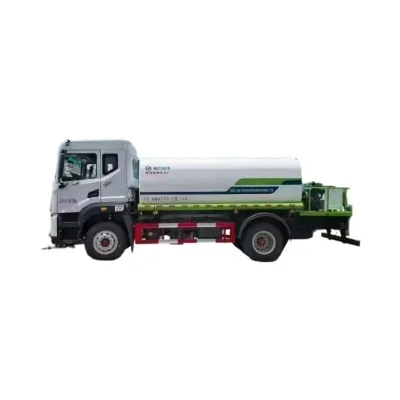
Procuring diesel-powered water trucks for agricultural operations requires a careful balance between payload capacity, terrain adaptability, and operational efficiency. These specialized vehicles serve as critical infrastructure for irrigation, dust suppression, and field maintenance, particularly in large-scale farming environments where access to municipal water systems is limited. The core keyword "agricultural needs diesel water truck" points to a segment of heavy-duty commercial vehicles designed to transport significant volumes of water across uneven or unpaved surfaces. Buyers must prioritize vehicles that offer robust chassis configurations and reliable diesel propulsion systems capable of sustaining long hours of operation under heavy loads.
The decision to source these vehicles often hinges on the specific topographical challenges of the farm or agricultural site. Unlike standard municipal street sweepers or fire trucks, agricultural water trucks must navigate narrow field paths, muddy conditions, and steep gradients without compromising stability. Consequently, the selection process involves evaluating wheelbase configurations, axle loads, and ground clearance to ensure the vehicle can operate effectively in the intended environment. This guide outlines the essential technical, compliance, and commercial factors that procurement teams should consider when sourcing diesel water trucks for agricultural applications.
Product Scope and Observed Listing Signals
Market listings for agricultural water trucks reveal a diverse range of configurations, primarily distinguished by their gross vehicle weight and tank capacity. Observed data indicates a wide spectrum of options, from lighter units with a gross vehicle weight of approximately 7,300 kg and a tank volume of 4.44 cubic meters, to heavier models reaching 25,000 kg with a tank capacity of 16.30 cubic meters. This variance allows buyers to match vehicle size to specific irrigation demands, ensuring that smaller plots do not require oversized, inefficient machinery while larger estates are not underserved by low-capacity units. The presence of multiple chassis models, such as the EQ1256gl6DJ and Ql1070buhacy, suggests that suppliers offer modular solutions based on different base truck platforms.
Another significant signal in current listings is the availability of customization options and the condition of the vehicles, which are predominantly listed as new. The ability to customize the tank volume, pump systems, or spray configurations is a critical feature for agricultural buyers who may have unique water distribution requirements. Furthermore, the observed price range of $3,200 to $128,880 USD reflects the disparity between smaller, single-axle or light-duty trucks and heavy-duty, multi-axle models. Buyers should interpret this range not as a fixed price list but as an indicator of the structural complexity and material costs associated with different vehicle classes, necessitating detailed quotation requests for accurate budgeting.
Technical Specifications to Verify
When evaluating technical specifications, the wheelbase and axle configuration are paramount for determining maneuverability and load distribution. Agricultural water trucks often feature multi-axle setups, such as a three-axle configuration with a wheelbase of 4350+1350 mm or similar variations, which provide the necessary stability for heavy loads on soft soil. The axle load ratings, observed in listings as 7000/18000 kg for two-axle groups or 4350/7645 kg for lighter models, must be verified against the actual weight of the water and the vehicle itself to prevent chassis damage or tire failure. Buyers should also inspect the approach and departure angles, which range from 15/7 degrees to 24/13 degrees, to ensure the vehicle can traverse field obstacles without undercarriage contact.
The propulsion and transmission systems must be robust enough to handle continuous operation in demanding environments. Diesel engines paired with manual transmissions are commonly observed, offering durability and ease of maintenance in remote agricultural settings. Maximum speeds typically range from 88 km/h to 115 km/h, which is sufficient for transit between fields but not a primary performance metric for off-road work. Additionally, the dimensions of the vehicle, including track widths and overall length, must be compatible with farm infrastructure such as gate widths and storage sheds. Verification of the number of tires, often six or ten depending on the model, is essential to ensure adequate traction and load-bearing capacity for the specific agricultural terrain.
Compliance and Safety Documentation
Compliance with local and international standards is a non-negotiable aspect of sourcing agricultural water trucks, particularly regarding vehicle certification and safety features. Listings frequently mention CCC certification, which is a mandatory product certification system in China, indicating that the vehicle meets specific national safety and quality standards. Buyers importing these vehicles must verify whether this certification is recognized in their destination country or if additional local homologation is required. Understanding the regulatory landscape is crucial to avoid customs delays or legal issues upon importation, ensuring that the vehicle can be legally operated on public roads if transit between distant fields is necessary.
Safety documentation should also include detailed information on the vehicle’s braking systems, lighting, and emergency shutdown mechanisms. While specific test results are not always listed, buyers should request comprehensive safety manuals and operational guidelines from the supplier. These documents should outline the procedures for safe loading and unloading of water, as well as maintenance schedules for the diesel engine and hydraulic systems. Ensuring that the vehicle meets all relevant occupational health and safety standards protects both the operators and the agricultural business from potential liabilities associated with vehicle accidents or mechanical failures.
Cost Drivers and Commercial Terms
The cost of agricultural water trucks is influenced by several key factors, including the tank volume, chassis model, and the level of customization required. Larger tank capacities, such as 16.30 cubic meters, naturally command higher prices due to the increased material and engineering costs involved. Additionally, the choice of chassis model plays a significant role in pricing, with heavier-duty platforms like the EQ1256gl6DJ being more expensive than lighter alternatives. Buyers should also consider the cost of ancillary equipment, such as high-pressure pumps, spray nozzles, and water intake systems, which may be sold separately or as part of a bundled package.
Commercial terms, including minimum order quantities (MOQ) and lead times, are critical components of the procurement strategy. Observed listings often indicate an MOQ of 1, suggesting that suppliers are flexible and willing to accommodate single-unit purchases, which is common for agricultural operations that may not require fleet-wide replacements simultaneously. However, buyers should negotiate clearly on delivery schedules, as manufacturing and shipping times can vary based on the vehicle’s configuration and the supplier’s production capacity. It is advisable to include clauses in the purchase agreement that address potential delays and define the responsibilities for shipping and insurance, ensuring that the total cost of ownership is accurately calculated.
Supplier Qualification and Quality Control
Selecting a qualified supplier is essential to ensure the reliability and longevity of the agricultural water truck. Buyers should prioritize suppliers with a proven track record in manufacturing or distributing heavy-duty commercial vehicles, particularly those with experience in the agricultural sector. Verification of the supplier’s production capabilities, quality control processes, and after-sales support network is crucial. Suppliers located in industrial hubs such as Hubei, China, often have access to a robust supply chain for automotive components, which can contribute to consistent build quality and competitive pricing.
Quality control measures should be explicitly defined in the procurement contract, including pre-shipment inspections and testing protocols. Buyers should request detailed inspection reports that cover the structural integrity of the tank, the performance of the diesel engine, and the functionality of the water distribution system. Establishing a clear warranty policy and access to spare parts is also vital, as downtime due to mechanical issues can have significant financial implications for agricultural operations. Building a long-term relationship with a reputable supplier can facilitate easier maintenance and potential future upgrades to the vehicle fleet.
Long-Term Procurement Checks
Long-term procurement success depends on the vehicle’s maintainability and the availability of technical support over its operational lifespan. Buyers should assess the ease of access to critical components such as the engine, transmission, and pump systems for routine maintenance and repairs. Vehicles with standardized components and widely available spare parts are preferable, as they reduce downtime and maintenance costs. Additionally, the availability of technical documentation in the buyer’s local language can significantly enhance the efficiency of maintenance operations and reduce the risk of improper servicing.
Regular performance monitoring and feedback loops with the supplier are also important for long-term procurement checks. Buyers should establish a system for tracking vehicle performance, including fuel efficiency, maintenance frequency, and any recurring issues. This data can be used to negotiate better service terms, request design improvements, or inform future purchasing decisions. By maintaining a proactive approach to vehicle management and supplier engagement, agricultural businesses can maximize the utility and value of their diesel water trucks, ensuring consistent support for their irrigation and field maintenance needs.
FAQs
What is the tank volume for the large diesel water truck?
The large diesel water truck has a tank volume of 16.30 cubic meters. This capacity is designed for heavy-duty agricultural needs and is paired with a gross vehicle weight of 25000 kilograms.
Which certification does the water sprinkler truck hold?
The water sprinkler truck holds CCC certification. This standard ensures the vehicle meets specific safety and quality requirements for operation in the target markets.
Can the water truck be customized for specific needs?
Yes, customization is available for the water truck. Buyers can request specific modifications to suit their agricultural requirements while maintaining the new condition of the vehicle.
What is the maximum speed of the diesel water truck?
The maximum speed of the diesel water truck reaches up to 115 kilometers per hour. This speed varies by model, with some units operating at 88 or 103.89 kilometers per hour.
How many axles does the heavy-duty water truck have?
The heavy-duty water truck is equipped with three axles. This configuration supports a gross vehicle weight of 25000 kilograms and an axle load of 7000 or 18000 kilograms.
What is the origin location of the water truck?
The water truck originates from Hubei, China. This location is the primary manufacturing hub for these diesel-powered vehicles used in agricultural applications.
What is the curb weight of the smaller water truck model?
The smaller water truck model has a curb weight of 3150 kilograms. This lighter unit features a tank volume of 4.44 cubic meters and a gross vehicle weight of 7300 kilograms.